
Tiling in Historic Jacksonville Homes: How to Address Uneven Floors & Settling
TL;DR: Historic Jacksonville homes rarely have level, flat subfloors, and tile is rigid enough to crack when the floor beneath it isn't. Before any tile goes down, Tola Tiles checks joist deflection, levels the floor with self-leveling underlayment, and installs a crack-isolation membrane to absorb ongoing structural movement — the same three steps regardless of whether you're going with modern large-format tile or a period-appropriate hex pattern.
Upgrading a historic home's flooring is a major investment, requiring specialized prep work and expert floor tiling to prevent cracking as the structure settles. Jacksonville is home to beautiful historic neighborhoods like Riverside, Avondale, San Marco, and Springfield. Homes in these neighborhoods, built between the late 1800s and the 1940s, have irreplaceable architectural character and heart pine trim, but they also present real challenges for modern renovations, particularly tile flooring installation.
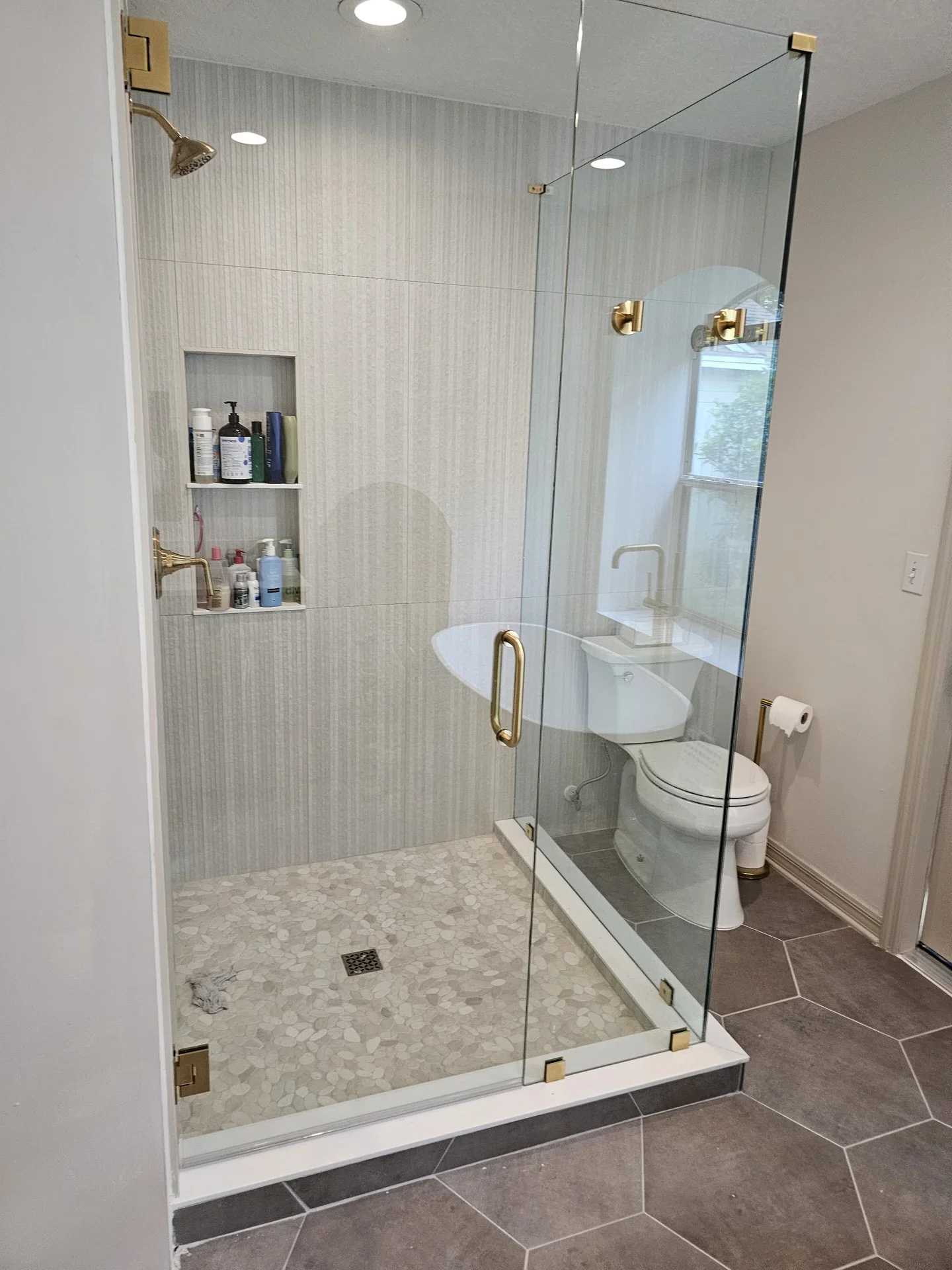
The challenge: old subfloors are never level or flat
Tile is an unforgiving material. Unlike carpet, vinyl, or wood, which can flex slightly over dips and rises, tile is rigid. If a subfloor is uneven, sagging, or shifting, the tile or its grout lines will eventually crack under load.
| Structural issue | Why it happens | How we fix it |
|---|---|---|
| Deflection (floor bounce) | Older joists were often spaced further apart or milled smaller than current code requires, so the floor flexes underfoot | Sister new joists alongside the old ones, or add a second layer of offset exterior-grade plywood to stiffen the platform |
| Settling and slope | Decades of foundation settling and wood joists drying out can drop a floor several inches from one corner of a room to another | Pour self-leveling underlayment (SLU) to create a flat, level plane before tile goes down |
| Seasonal movement | Florida's humidity swings cause old wood framing to expand and contract year-round | Install a crack-isolation membrane between the subfloor and the tile to absorb movement before it reaches the grout |
How Tola Tiles prepares historic floors for tile
A tile job is only as good as the structural preparation beneath it. Our in-house crew takes three steps to keep a historic floor solid and crack-free for decades.
1. Assessing and stiffening the subfloor
We check the spacing and span of your floor joists to calculate deflection. If the floor is too springy, we reinforce it by sistering new joists alongside the old ones or adding a second layer of exterior-grade plywood subfloor, offsetting the joints to create a rigid, stable platform.
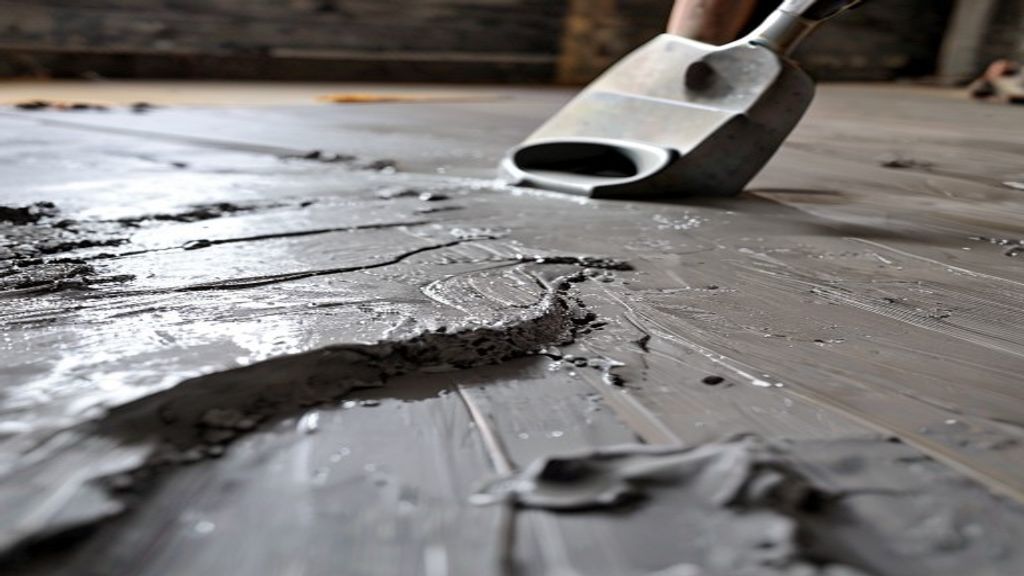
2. Structural floor leveling
To fix slopes and dips, we use high-performance self-leveling underlayment. After sealing the subfloor, we pour a liquid cementitious compound that flows and self-levels, creating a flat plane. This matters most for modern large-format tile, which needs a flat surface to prevent lippage (uneven tile edges) — see our guide on large-format and gauged porcelain.
To fix slopes and dips, we use high-performance self-leveling underlayment. After sealing the subfloor, we pour a liquid cementitious compouTo fix slopes and dips, we use high-performance self-leveling underlayment. After sealing the subfloor, we pour a liquid cementitious compouTo fix slopes and dips, we use high-performance self-leveling underlayment. After sealing the subfloor, we pour a liquid cementitious compouTo fix slopes and dips, we use high-performance self-leveling underlayment. After sealing the subfloor, we pour a liquid cementitious compouTo fix slopes and dips, we use high-performance self-leveling underlayment. After sealing the subfloor, we pour a liquid cementitious compouTo fix slopes and dips, we use high-performance self-leveling underlayment. After sealing the subfloor, we pour a liquid cementitious compou3. Installing a crack-isolation membrane
Old homes are constantly moving, expanding, and contracting with Florida's seasonal humidity shifts. We install a crack-isolation membrane (such as Schluter-Ditra or a comparable sheet membrane) between the wood subfloor and the tile. It acts as a flexible buffer that absorbs structural movement before it travels up into the tile.
Aesthetic tile choices for historic Jacksonville homes
When renovating a historic home, the goal is modern durability without losing the building's character. These pattern choices hold up well against that goal:
| Pattern | Best rooms | Why it fits historic homes |
|---|---|---|
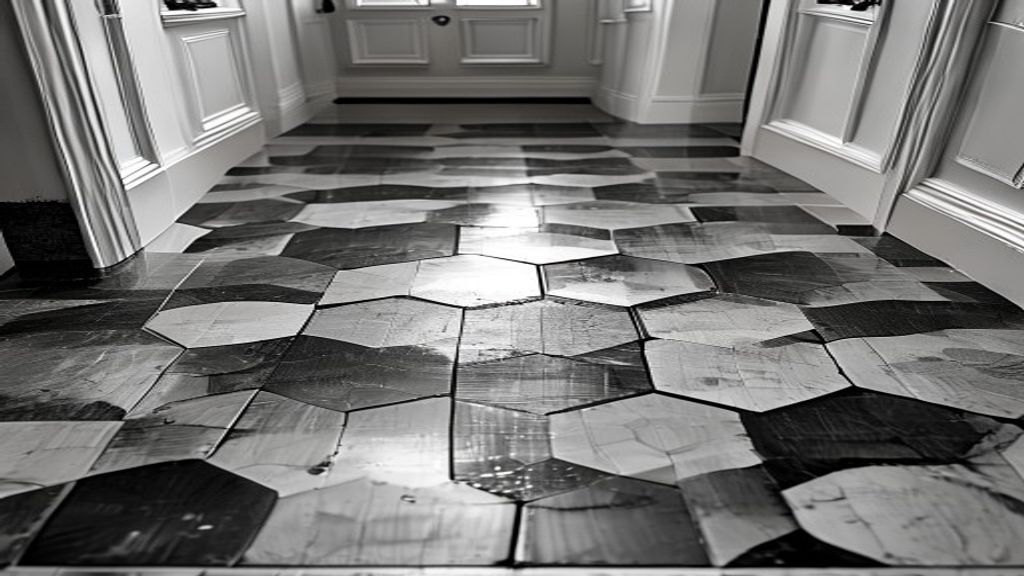
| Hexagon or penny tile (1–2 inch) | Bathrooms, powder rooms | The classic turn-of-the-century look, often with a black-and-white border or flower pattern |
| Checkerboard (diagonal) | Kitchens, mudrooms, entryways | A traditional black-and-white statement pattern original to many pre-1940s homes |
| Encaustic-look cement tile | Fireplaces, laundry rooms | Rich pattern and color that reads as period-appropriate without using fragile real encaustic cement |
| 3x6 subway tile | Bathroom walls, kitchen backsplash | Pairs cleanly with any of the historic floor patterns above |
Why Jacksonville homeowners choose Tola Tiles
Tola Tiles is a family-owned specialty contractor based in Northeast Florida with over 15 years of residential tiling experience. We rely exclusively on our dedicated, 4-person in-house crew rather than independent subcontractors, so the extensive prep work historic homes need gets done to the same standard every time. We back all floor tiling installations with a 2-year workmanship warranty and hold a 5.0-star reputation. Contact us today to discuss your historic home flooring project.
TL;DR: Historic Jacksonville homes rarely have level, flat subfloors, and tile is rigid enough to crack when the floor beneath it isn't. BeTL;DR: Historic Jacksonville homes rarely have level, flat subfloors, and tile is rigid enough to crack when the floor beneath it isn't. BeFrequently Asked Questions
Can you install large format tile on uneven floors in an old house?▼
What is a crack-isolation membrane, and why is it needed in old homes?▼
Is it better to use porcelain or ceramic tile in historic homes?▼
Ready to Start Your Tile Project?
Contact Tola Tiles today for a free estimate on your next tile installation project.